Why Northwest Ohio Is Hard on Ceilings
Between Lake Erie and a hundred freeze-thaw cycles a season, this region manufactures ceiling damage almost industrially. Snow piles onto rooflines, heat escaping through under-insulated attics melts the bottom layer, and the meltwater refreezes into an ice dam at the cold eave. Trapped water then creeps uphill under the shingles until it finds your bedroom drywall. By spring, the evidence is a brown-ringed stain in the corner — or worse, a bulging, saturated patch of ceiling that needs cutting out.
Winter isn't the only author. Humid summers swell wood framing and then release it every fall, working joints loose year after year. Aging galvanized and copper plumbing in mid-century houses drips into the ceilings below. Bath fans disconnected somewhere in an attic dump steam onto the back of the drywall. And in Toledo's oldest neighborhoods, original plaster ceilings slowly lose their grip on the lath after a century of vibration and moisture swings. Different causes, same conclusion: ceiling damage never improves on its own, and it's almost always cheaper to fix this year than next.
The Damage We See Most Around Toledo
Ice-dam water stains
Tan-to-brown rings along exterior walls and in upstairs corners, usually appearing during a February thaw. Once the roof issue is corrected, the ceiling needs drying, stain-blocking, and refinishing — or panel replacement if the core got soaked.
Plumbing and bath leaks
Soft, discolored drywall under bathrooms and kitchens. These repairs start with a moisture meter and end with new board, because gypsum that's been wet loses its strength for good.
Seam and settling cracks
Straight-line cracks tracking drywall joints, or corner cracks that open each winter and shrink each summer. Re-taping with mesh and flexible compound outlasts the annual caulk-and-hope routine.
Sagging drywall or plaster
Ceilings that pillow between joists — from moisture, undersized fasteners, or plaster keys breaking off the lath. Some can be re-secured with screws and washers; the far-gone sections come down and get replaced.
Botched patches and holes
Electrician exploratory holes, old fixture relocations, and DIY patches that flash through paint. Solid backing, fresh tape, and a matched surface erase them completely.
Damaged popcorn texture
Flaking or water-hit acoustic texture is its own category: pre-1990s material gets lab-tested before anyone touches it, then repaired, encapsulated, or removed entirely based on the result.
Fix the source before the symptom. A repaired ceiling under an unrepaired leak is a subscription, not a solution. Expect any conscientious quote to ask what caused the damage — and to recommend a roofer, plumber, or insulation fix first when the answer is "not sure."
How a Ceiling Repair Comes Together
Diagnose and confirm dry
A moisture meter tells the truth a glance can't: is that stain a scar from a fixed leak, or is the material still wet? Active moisture gets traced to its cause before cosmetic work begins.
Remove what's ruined
Water-weakened drywall gets trimmed back until only sound board over solid framing remains. The insulation overhead gets inspected too — wet batts would press moisture into the fresh drywall, so they come out with the damage.
Rebuild the surface
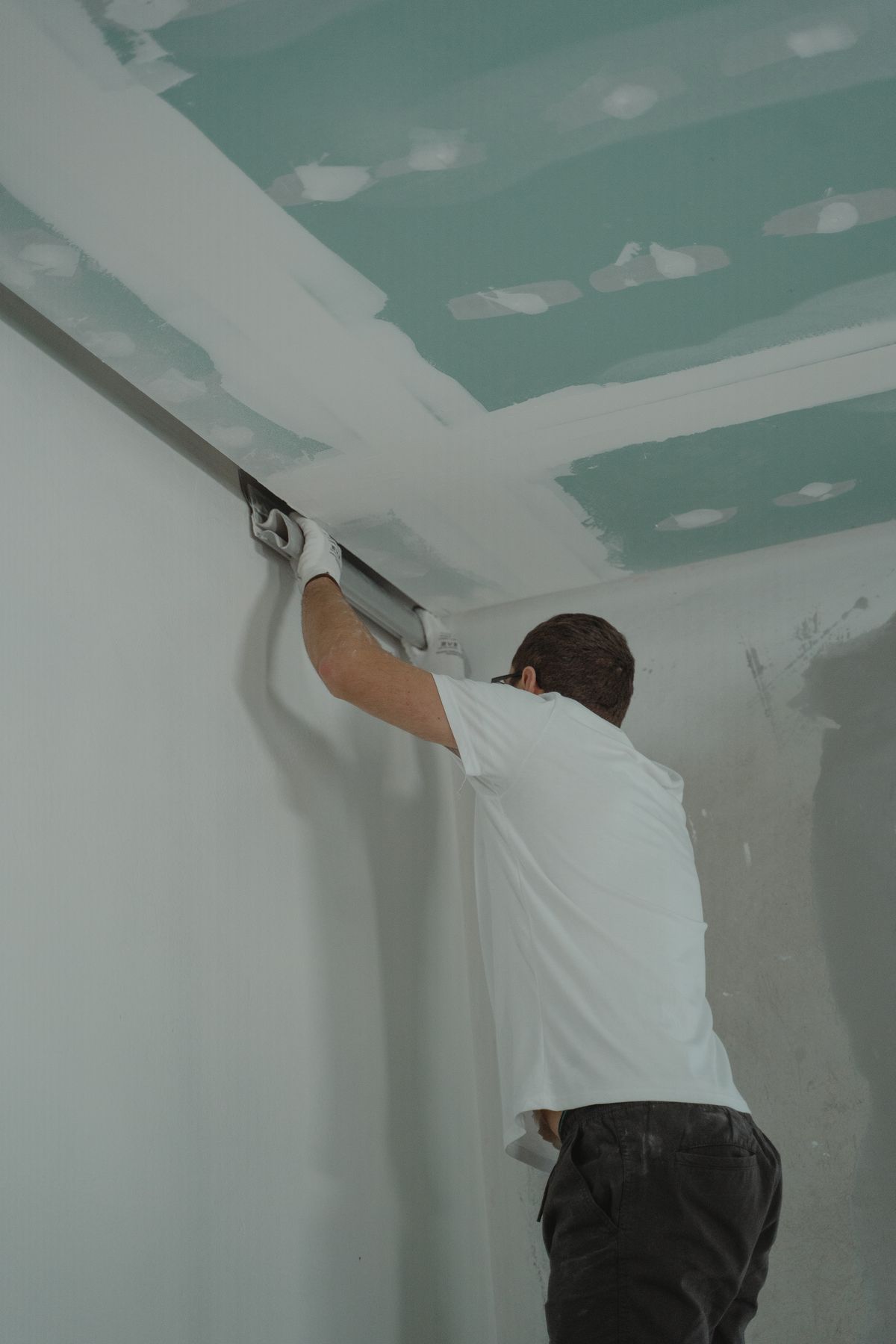
New board goes in with proper backing, seams get taped and fed successive coats of compound, and cracks in surviving areas get reinforced so the repair doesn't just relocate the problem.
Blend the finish
A patch isn't finished until it's unfindable. That means matching the surrounding texture — smooth, knockdown, or orange peel — and feathering the edges wide.
Seal and repaint
Water marks bleed through ordinary paint indefinitely, so stains get a dedicated shellac or oil-based blocker before ceiling paint goes on. Painting corner to corner, rather than spot-touching, keeps sheen uniform under window light.

A Word on Toledo's Plaster Ceilings
If your home predates roughly 1940 — common from the Old West End to Birmingham to the older blocks of Maumee — your ceilings are likely plaster over wood lath, and they deserve a different playbook. Cracks in plaster often signal keys (the squeezed-through plaster hooks holding everything up) breaking loose, and the modern fix is usually reattachment with adhesive or plaster washers plus a reinforcing skim, not demolition. Where sections have truly failed, a drywall inlay can be married into the surviving plaster invisibly. Good repair preserves the solid, quiet character that makes these ceilings worth keeping — and costs far less than gutting a century of craftsmanship to hang new board.
Preventing the Next Stain
Repair is half the value of a good ceiling visit; the other half is not meeting again next spring. A few habits pay off disproportionately in this climate:
- Feed the attic, starve the ice dam. Most ice dams trace back to warm air leaking into the attic. Air-sealing the ceiling plane and topping up insulation keeps the roof deck cold so snow melts from the sun, not from your furnace.
- Keep gutters moving. Clogged gutters give eave ice a head start. A late-fall cleaning after the oaks and maples finish dropping is cheap insurance.
- Verify bath fans actually exit the house. Plenty of Toledo fans blow into the attic, quietly soaking insulation and the back of your ceiling. Follow the duct once; fix it forever.
- Watch the usual suspects each February. Upstairs corners on the north side, ceilings under roof valleys, and around chimneys. A stain the size of a coaster is a cheap repair; wait a season and it seldom stays coaster-sized.
Repair Questions Toledo Homeowners Ask
Is painting over a water stain good enough?
Only when both boxes get checked: the leak has genuinely been corrected, and the stain sits under a real stain-blocking primer. Skip the primer and the tannin ring resurfaces through fresh paint within months. Skip the leak diagnosis and you're repainting annually. Done in the right order, a stain repair is quick and permanent.
How do I know if sagging drywall is an emergency?
A slight, stable pillow between joists is a schedule-it-soon problem. A spreading bulge, dripping, or a ceiling that visibly moved this week is a today problem — saturated drywall is heavy, and it fails suddenly rather than gradually. Poke a small drain hole through an actively dripping bulge into a bucket to relieve the weight, keep people out of the room, and get help moving.
Will insurance cover my ceiling repair?
Abrupt accidental events — the classic burst pipe or storm-torn opening — frequently qualify; gradual seepage and neglected maintenance generally don't. Ice-dam claims fall somewhere in the middle depending on your policy. Photograph everything before cleanup, and ask your carrier directly; nothing here is coverage advice.
Is a stained ceiling a mold risk?
It can be, since the paper facing of drywall feeds mold when it stays damp. A promptly dried, source-fixed stain rarely develops a problem; a chronically damp corner can. Musty odor, fuzzy discoloration, or repeated wetting are reasons to open the area up and inspect rather than paint and pray.
Can you match my ceiling's existing texture on a patch?
Yes — orange peel and knockdown patches are sprayed and blended routinely, and even hand-applied patterns can usually be reproduced with practice passes on scrap. The one exception is popcorn on an older home, where matching takes a back seat to testing: nobody should be spraying new texture against material that hasn't been cleared by a lab.
What does a typical ceiling repair cost?
Minor blend-in patches tend to land in the low hundreds; swapping out a water-ruined section with texture matching and repainting typically reaches the mid-hundreds to low thousands depending on size and height. If damage covers much of a textured ceiling, it's worth pricing full removal and refinishing — sometimes the upgrade costs little more than the patchwork.
Bundle Repairs with a Bigger Refresh
Ceiling repair pairs naturally with the rest of what this site covers. If the stained ceiling is also wearing 1978 popcorn, one project can test it, remove it, repair the damage underneath, and refinish the whole surface — one crew, one containment, one clean result. Ask for combined pricing when you call; fixing everything at once is consistently cheaper than three separate service visits.
Leave No Evidence Overhead
Free repair estimates across Toledo and its suburbs — from a lone stain to a whole-ceiling rebuild.